Visual identity & branding
Introduction
Visual identity is a collection of visual elements that serve to represent and differentiate a brand. More specifically, it refers to any visible components such as a logo or brand colors that help customers identify a brand. Consolidating each branding asset into a cohesive aesthetic develops brand recognition. Overall, building a visual identity and brand will help your audiences identify your content and bring more attention to your cause.
During this module, we will cover four main elements to consider but these are just the basics, there is so much more you can consider for your visual identity. The four elements are:
- Colour scheme
- Photos & imagery
- Fonts & typography
- Logos
Think of visual identity as a series of elements that together help your audiences recognise your content, in this sense, it is not that you will reproduce exactly the same elements always but more like across your content you can play with your brand colours or logos to be coherent with the platform and the audiences you are trying to reach. You can have a different visual identity for your personal brand, your organisation, a campaign, or even for a singular piece of content. It all depends on your goal, audience, and scope!
Purpose & goal
Before you create a visual identity, you should ask yourself the following questions:
- How can visuals contribute to my story and enrich it?
- How do I want my audience to feel when interacting with my content?
- Different visuals work better for different audiences, what do I need to keep in mind when targeting my audience?
- What visuals would match the tone of my content? Should I be serious, funny, elegant, playful, colourful, or dramatic?
Colour Scheme
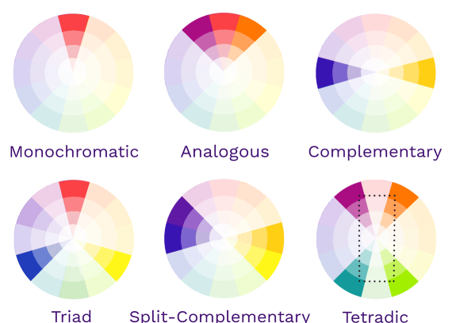
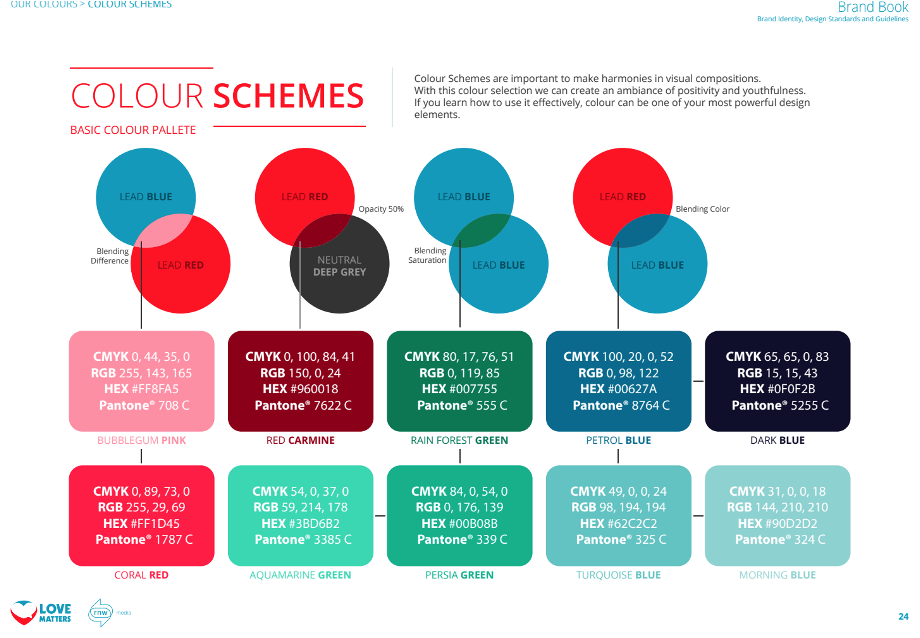
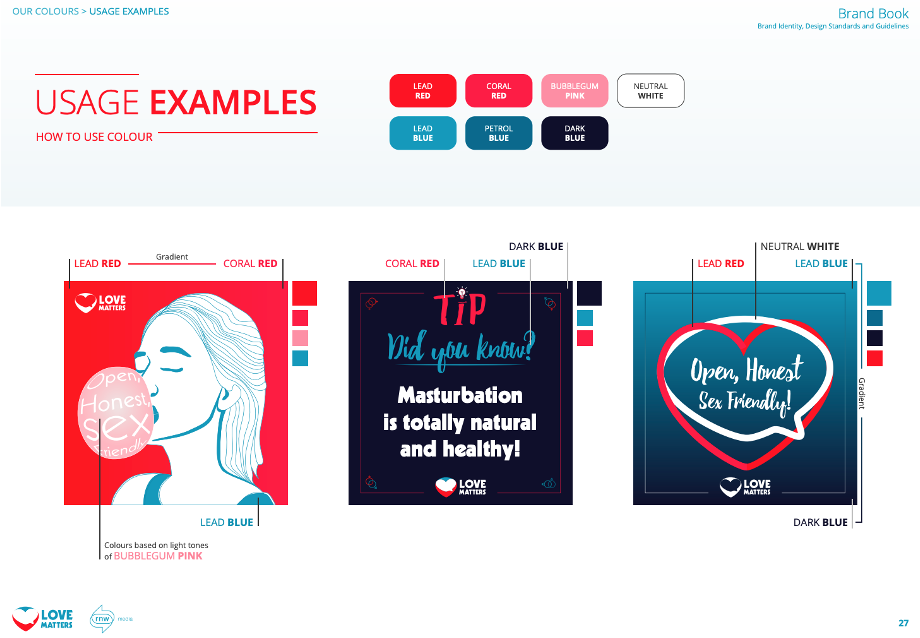
A colour scheme is a combination of colors that you use for a project. There are a variety of ways that you can generate color schemes, but the key is to choose one that makes your work feel cohesive. These six possibilities of combining colors are what generally work according to color theory.
If you are not a designer a great tool for finding the right color palette is THIS ONE. It will generally provide 4-5 colours that go well together and how to distribute them across your design.
Photos & imagery
When using photos or images in general it is also really important to consider style. You want your brand to carry all the way into different types of media so thinking about what style of photography, or what type of illustrations you are going to use, is a great place to start! Ask yourself the following questions:
- Do you want to use primarily photography or illustrations?
- What style of photography or illustration will you be using?
Reflection
Take a look at the images below. What styles do you think they each have?

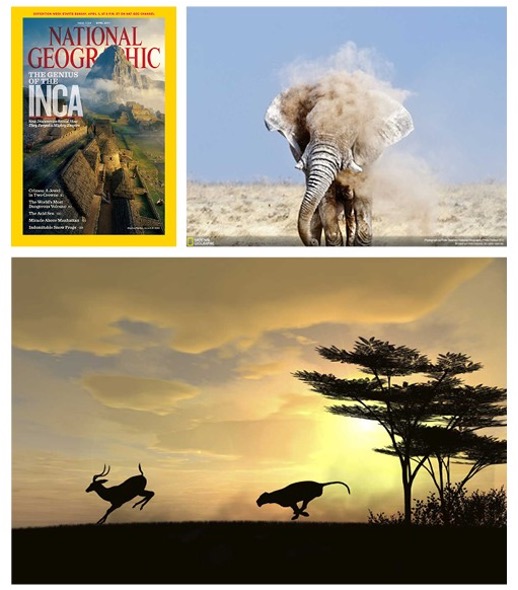
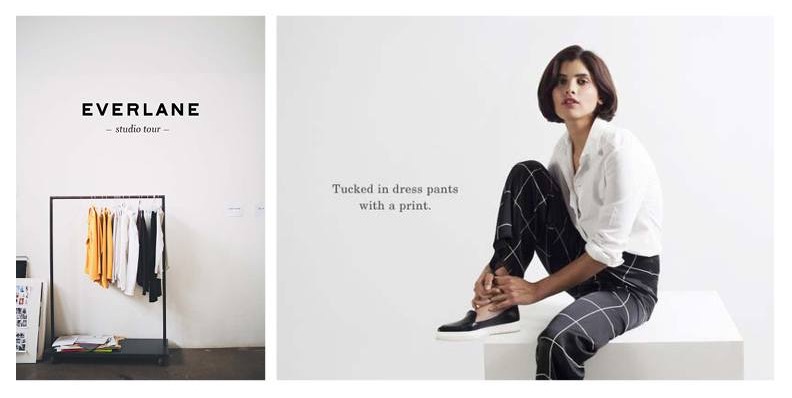
Here are a few examples of words you could have used to describe the style of each group of images:
- National Geographic: Vast, stunning imagery of nature and wildlife, vibrant, high contrast, epic
- Nike: cinematic, larger than life, speed and strength, grit
- Everlane: minimal, understated, bright and desaturated, hip, calm, unassumingly refined
Fonts & tipography
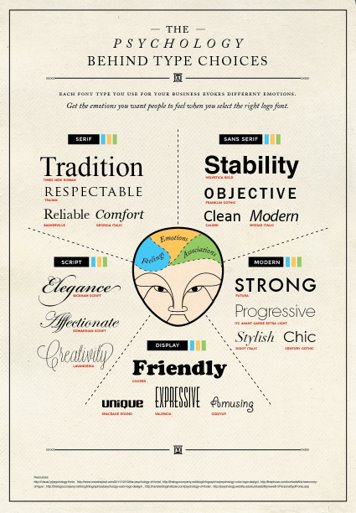
Your typography expresses your content/project personality through written elements of your brand. This includes choices of fonts, stylization, and capitalization.
- Are you doing advocacy? Bold, strong fonts will communicate urgency and action.
- Are you creating a playful piece of content? A light, geometric font might suit the job.
Additionally, make sure your font is readable both digitally and in print! You don’t want anyone to miss your message entirely.
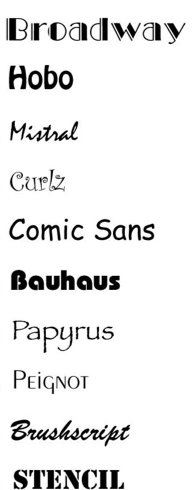
Reflection: fonts we love to hate
Why do you think people dislike these fonts?
Logos
To put it simply, a logo is a symbol or a visual design adopted by an organization to help audiences identify them immediately. The main purpose of the logo is to communicate effectively to their audiences about their identity, and therefore, its form should reflect this. You want to catch your audience’s attention and imprint your logo in their memories. There are many organizations that have successful and memorable logos, let’s see some examples:
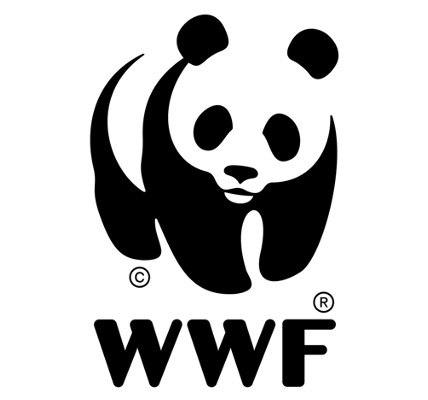
WWF has probably the most recognizable nonprofit pictorial logos, where they use an image as their focal point. Since it uses a monochrome color palette, it’s very adaptive and can be easily used in multiple mediums. The positive (black) space gives just enough definition so that a viewer’s eye can complete the rest and recognize the panda in an instant. The cute panda brings focus to the foundation’s mission of conserving wildlife and nature.
The Black Lives Matter logo is simple but the monochrome color scheme actually does the work for itself – it uses the raised fist, a long-established symbol, colours it in black to signal black lives, and keeps a strong, powerful font.
Extinction Rebellion has an hourglass to symbolize time running out and the urgent need for climate intervention, the logo is available in many colours, but it’s often found in green to signal its’ connection to climate activism.
It Gets Better integrates a rainbow to signal that it’s an LGBT project. They based their logo on a powerful statement instead of an image: it gets better.
In order to make a good logo we suggest you follow these guidelines, to begin with:
- Start with your story (mission/vision)
- Brainstorm words that best describe your organization
- Make a sketch based on these words
- Test your ideas with other people beyond your team
- Think of different places where your logo can be shown: website, social media, documents, infographics, etc.
- Pick versatile colour options
- Choose a font
Creating a brand guide
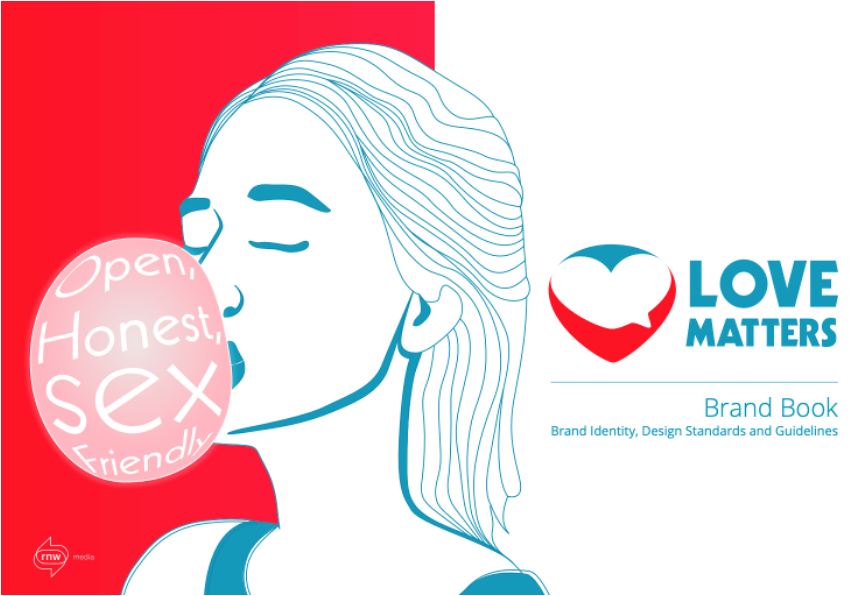
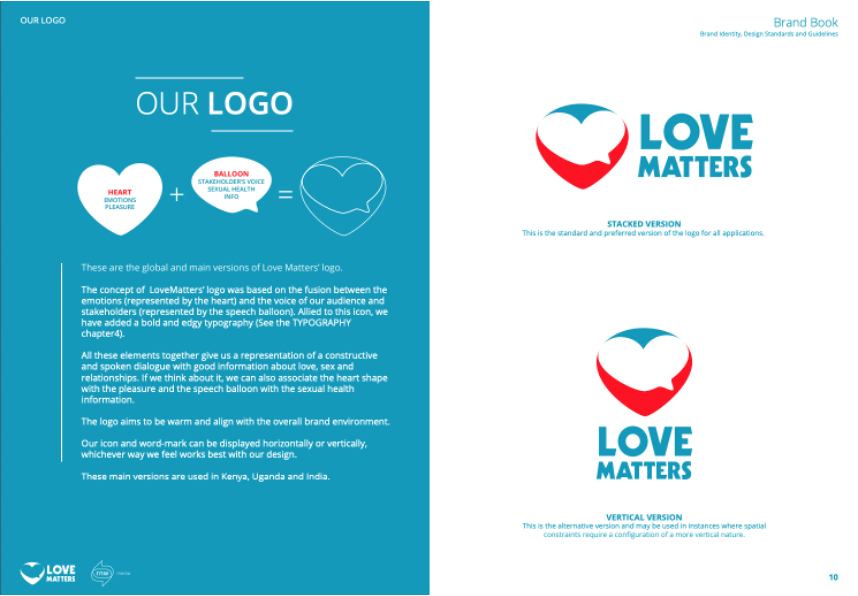
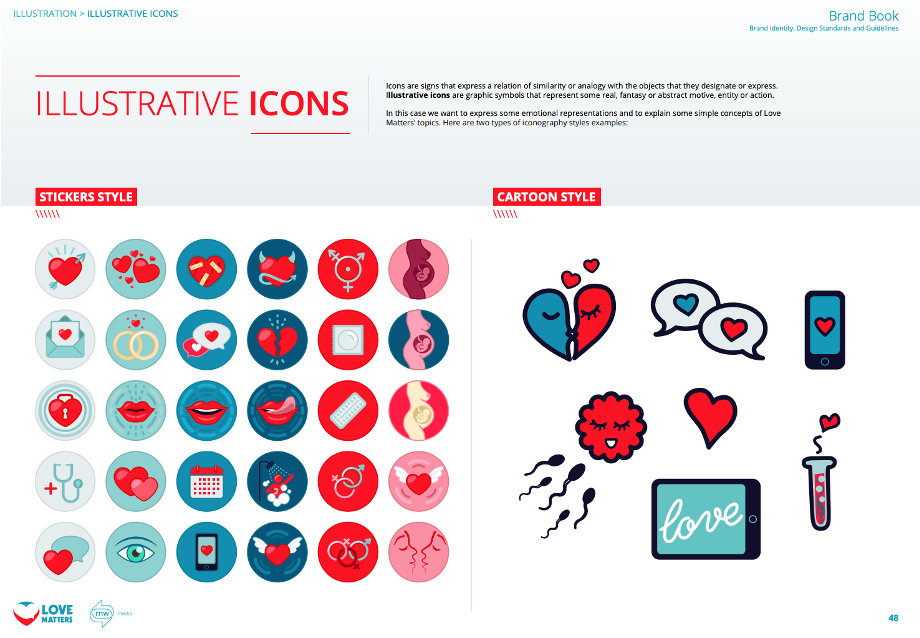
You can take all of your decisions and create a brand book, which can be described as your brand’s user manual. It is a key tool for your organisation, especially when it comes to creating content because it tells everyone in detail how to use your brand visual identity.
Key elements for a brand book:
- Brand name
- Outline the brand story, ethos, and purpose/mission
- Brand logo, and its variations
- Icons
- Color scheme
- Fonts, sizes, and style variations
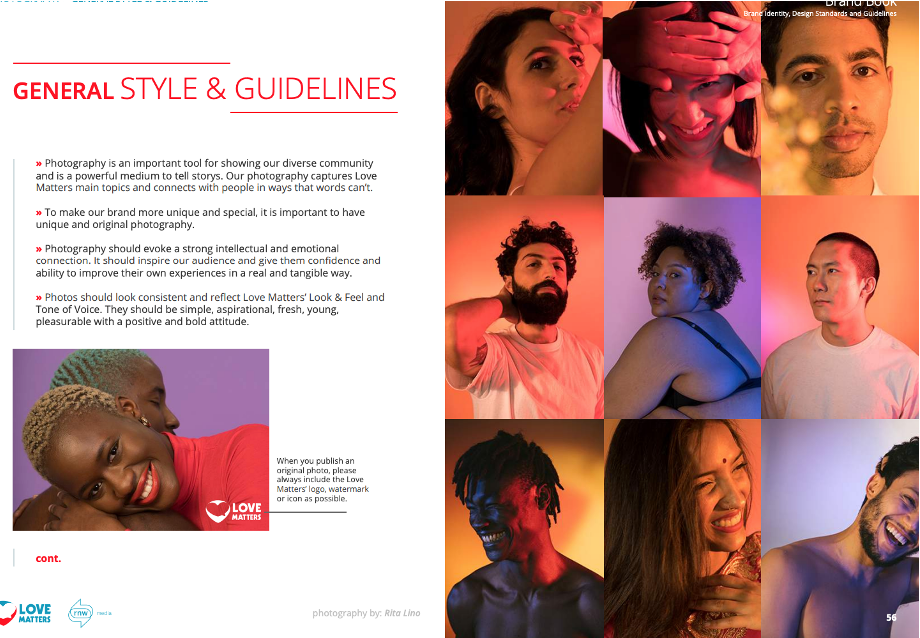
- Images that reflect the organisation and give examples as to what images can be used in the marketing strategy of the organisation
Pro tip!
Canva is an Australian graphic design platform, used to create social media graphics, presentations, posters, documents, and other visual content. The app includes templates for users to use. We highly recommend you explore this website and try out all the templates they have, you can get super creative with it!