Step 1: Identify the core issue Copy
Be very clear about exactly what it is that you are trying to change. Answer the questions:
- Why is it a problem?
- For whom is it a problem?
- What are the root causes of the problem?
- Why do you find this important?
It is an essential part of finding the right solution and helps to identify the right responses.
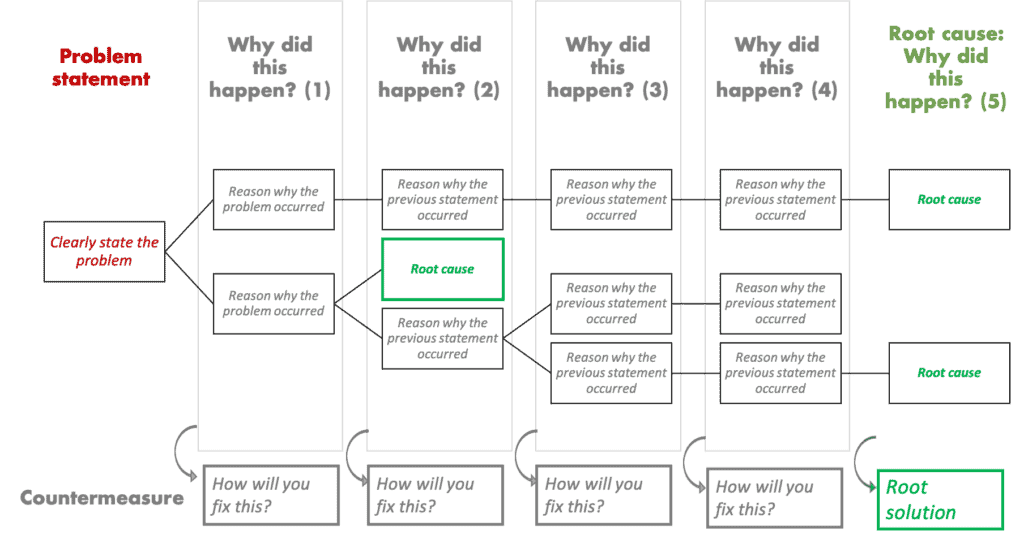
THE 5 WHYS TECHNIQUE
AIM OF THE TOOL
- To quickly dissect the problem and reveal its underlying causes.
HOW?
- Examine a problem by asking questions to find out what caused it. Each time an answer is given, a follow-up “But why?” is asked.
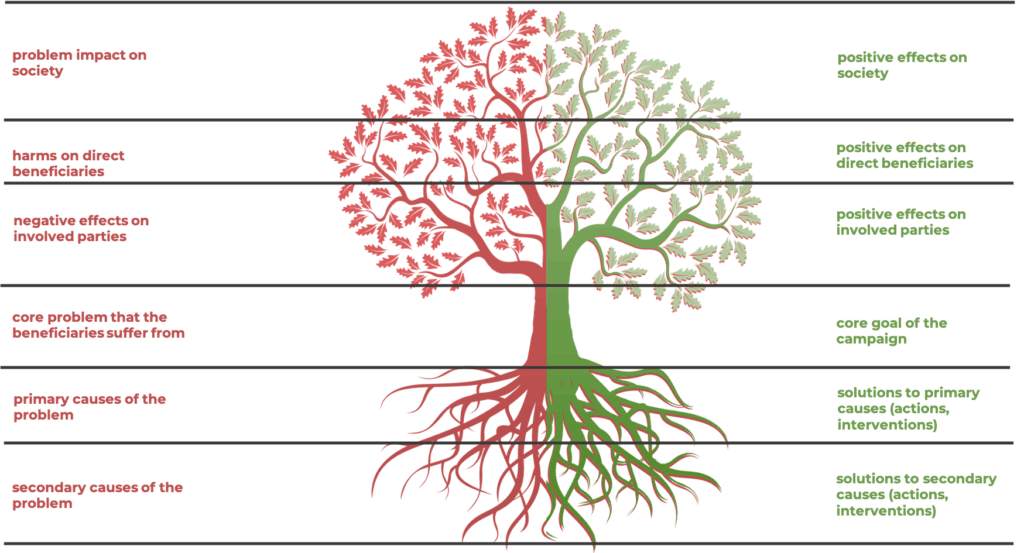
PROBLEM/SOLUTION TREE
AIM OF THE TOOL
- To help to understand complex challenges, and to find appropriate solutions by mapping out the cause and effect of each particular issue in detail.
HOW?
- Problem tree: causes form the roots of the tree, the core problem is the trunk, and the consequences are the branches of the tree.
- Solution tree: reverse the negative statements that form the problem tree into positive statements where the ‘challenge’ has been solved.
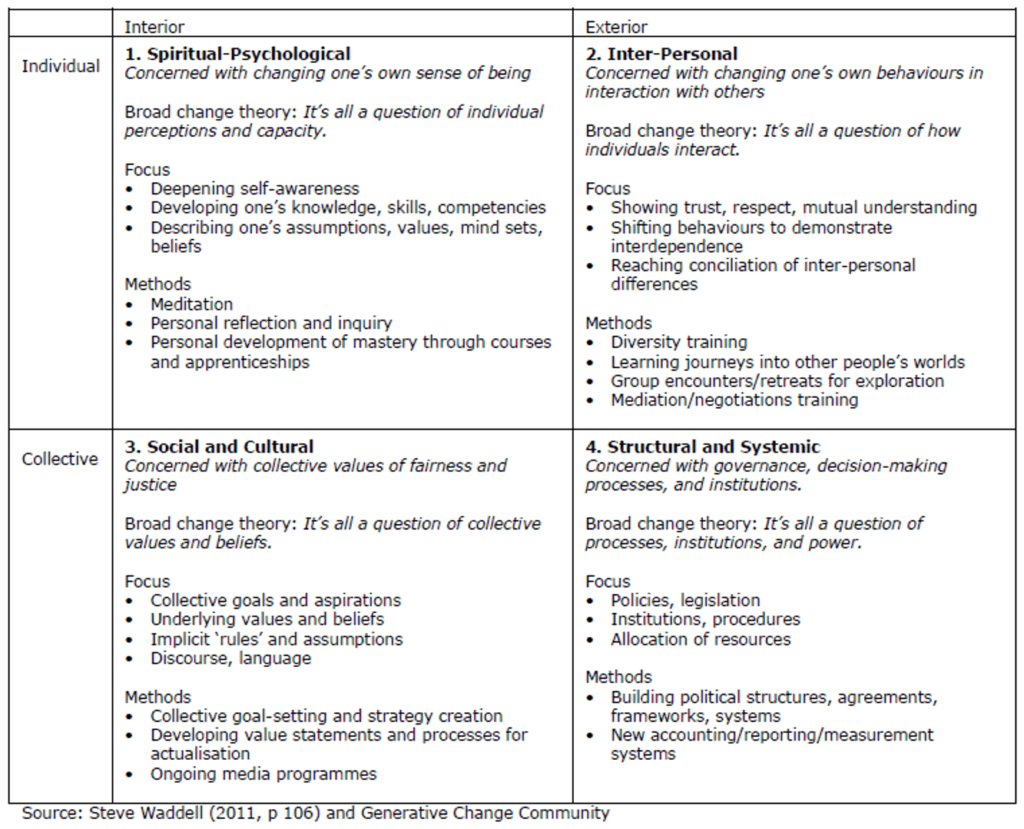
THE 4 QUADRANTS OF CHANGE
AIM OF THE TOOL
- To help consider what kind of changes need to happen, and which strategies are associated to them.
HOW?
- Complementary strategies are often needed to realise change. Fill in the quadrants using the solution tree statements to uncover all the changes that need to happen to solve the core issue. This doesn’t mean that you will work on all these changes.
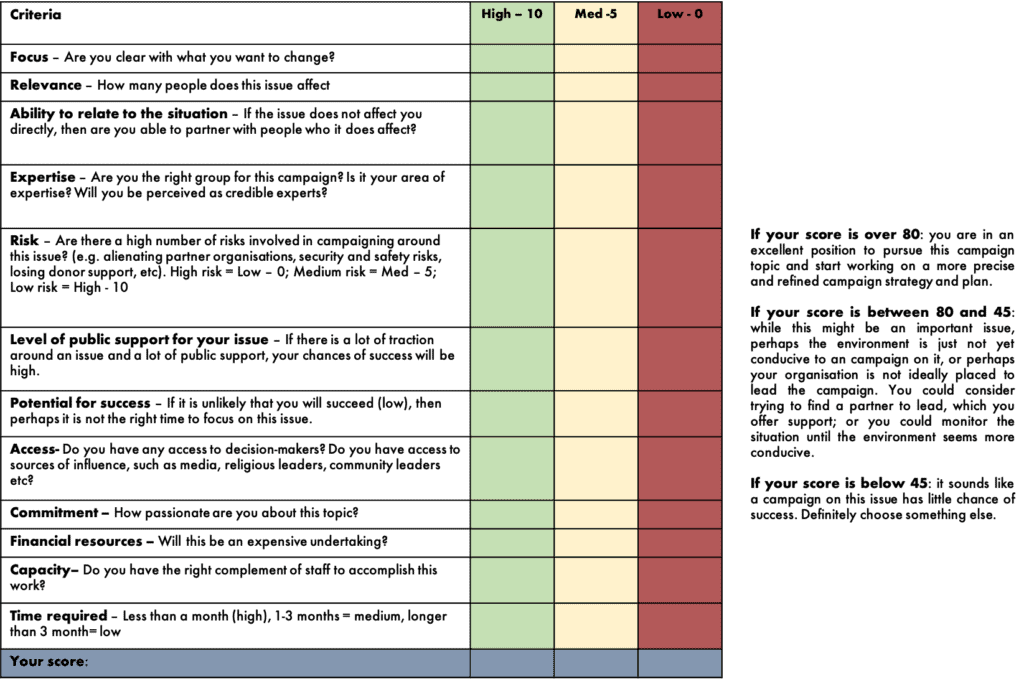
CRITERIA EVALUATION
AIM OF THE TOOL
- To make sure that the issue we face may be solved with resources that we would be able to mobilise.
HOW?
- Using the results of the problem/solution tree and the 4-quadrants of change, agree on 3 issues that the team feel most strongly about. You can use this list of criteria to help you explore these questions. Rate each criterion according to the scores for high, medium and low. Repeat the process with each campaign issue you’ve chosen to put on a shortlist and then compare the scores to more easily decide which issue seems to be best to focus on.