Tips & Strategies for Moderation
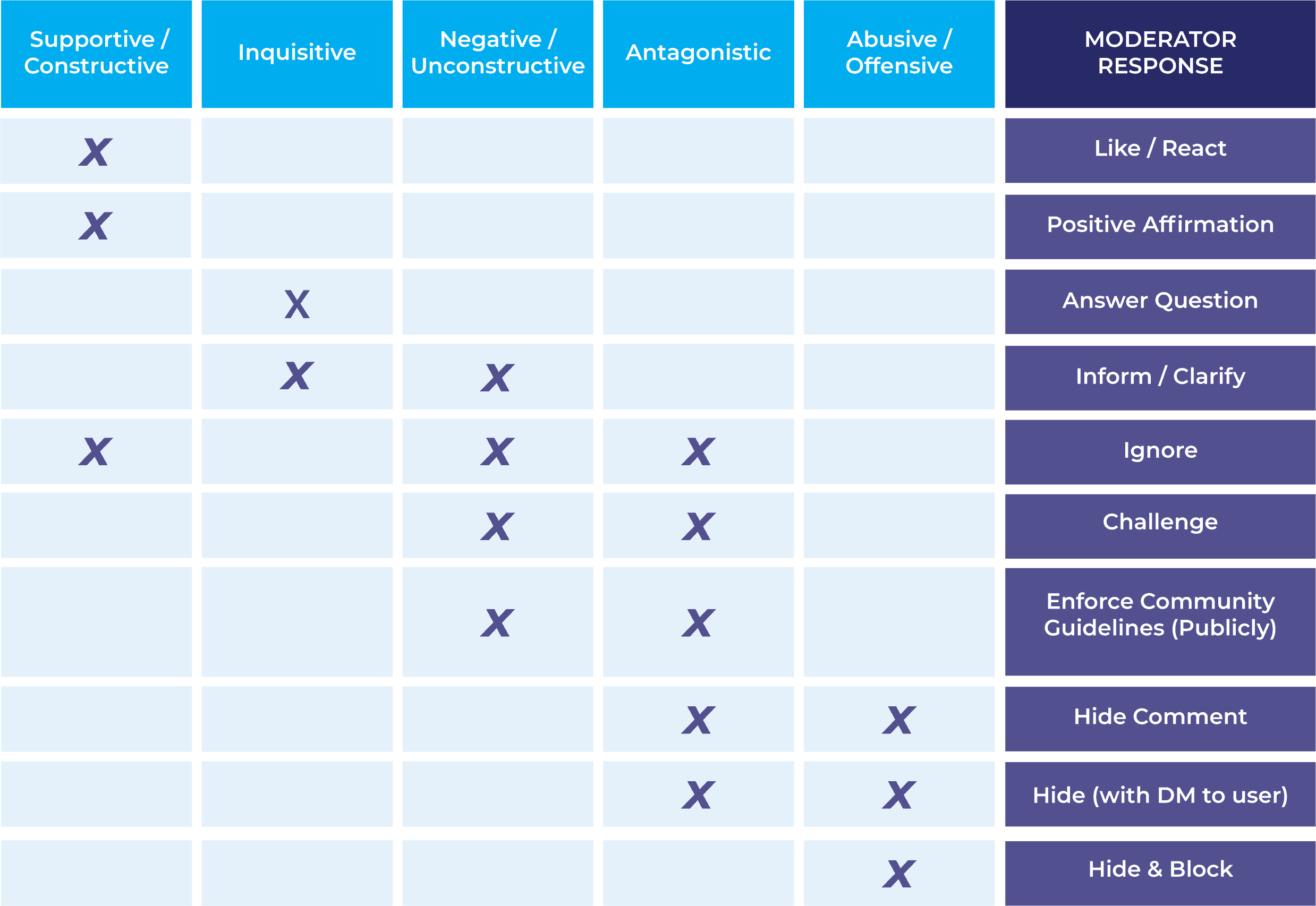
How to categorise and respond to comments
- Supportive/constructive: a user responding to the page or another user with the intention of having a respectful discussion.
- Inquisitive: users asking a question, clarifying content, or requesting more information on the topic.
- Negative/unconstructive: negative response from a user to another user or the page – not really seeking deeper conversation. In the polarisation context, this would be monologuing
- Antagonistic: a user participating in the conversation but not with good intentions – really aiming to stir up discord.
- Abusive/offensive: this can be anything from threats of violence, hate speech, etc.
Case Study: Discussing difficult situations with reference to more sensitive SRHR subjects – Love Matters Naija, Nigeria
Curated posts are essential to engage the young Nigerian audience. When a post is shared with the intent to inspire dialogue, it includes a call to action and encourages users to share their thoughts and experiences on the topic. Audience members who have experiences relating to the story or topic shared, often accept the invitation to respond and connect with other users in the comment section, below the post, or directly using the inbox (one-to-one conversation).
A wealth of information and insights can be drawn from such posts and the moderators can then react accordingly which may include referrals to partners for counseling, legal and/or social aid.
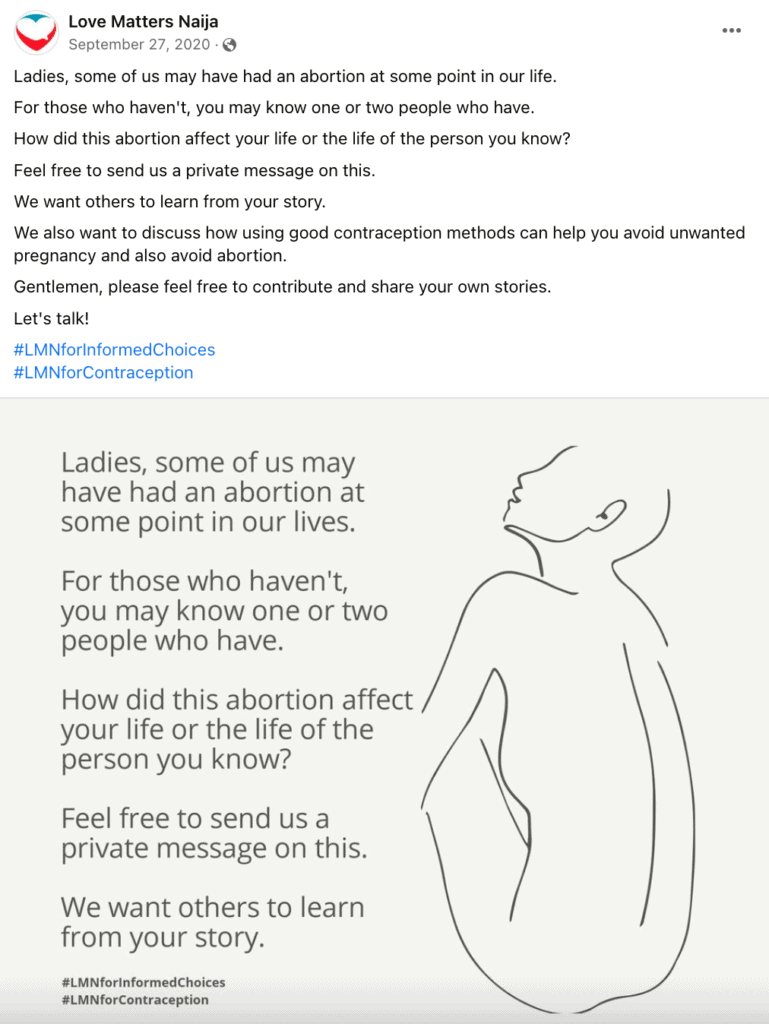
This post on the contextually controversial topic of abortion reached over 60,000 people. Comments on the subject reached 444, including interactions among users with moderated guidance. 19 personal experiences were shared via the inbox, including multiple abortions, unsafe practice with near death experiences, abandonment, mental health impact and ostracization. 4 of these were referred to our sexual reproductive health partner, Marie Stopes for follow up support services and post-care.
Moderation by representative teams
The content and editorial teams of your platforms should be diverse and include (where applicable) people of different genders, sexualities, regions, races, religions, tribes and socio-economic classes.
As online moderation of discussions between users on the digital platforms is an important tool to stimulate inclusive dialogue, it is essential to ensure that the moderators and community managers of the platforms are also truly representative of the online communities in the countries they operate in. If your work is in SRHR, a sex-positive attitude and mindset are essential attributes for the moderators – this way the moderators themselves can encourage pleasure positive discussion on sex and sexuality and encourage open, honest debate among and between users to create an inclusive SRHR digital community.
Case Study: Driving online discussion on Facebook by sharing user-generated content – Love Matters Naija, Nigeria
Users share their personal stories or questions via direct messaging using the Facebook inbox to be reviewed for public post. The Love Matters Naija moderators engage the user to share details by asking a few questions to validate the story and draw more information for clarity. Then moderators request the user’s consent to anonymously share the story or question posted on the wider public Facebook page. The interaction is tagged with the SRHR thematic pillar (for tracking and monitoring purposes) and queued to the social media editor for calendar planning, design and post.
The moderators then encourage the users who share their stories to follow our daily activities in order to spot when their story is published. The digital community responds very positively to seeing their own experiences reflected in the content shared. Many of them read the community comments and come back via the inbox to share feedback on what they gathered as valuable insights, advice or to expand the conversation with the moderator for advice.

Key takeaways
- Moderation is a tool to build an inclusive digital community
- Moderation is an important tool to communicate with users and bring marginalised groups into the conversations
- Moderation can be applied to create a safe space where young people are encouraged to think critically and engage in constructive discussion and feel comfortable to discuss more sensitive topics
- Moderating conversations is complex
- Extra attention should be paid to polarised situations