
Propaganda and Polarisation Copy
What is Propaganda?
Propaganda is the spreading of ideas, information, or rumor for the purpose of helping or injuring an institution, a cause, or a person. It is high on story, influencers, aim, and emotion.
There are 4 key steps to creating propaganda:
Step 1: Create an ideology
Propaganda often consists of six types of arguments and beliefs:
- Identification of injustice & critique: this activates feelings of frustration and moral outrage
- Identification of a collective enemy that is responsible: this transfers responsibility related to attacks
- Configuration of a stereotype that devalues / dehumanises the enemy: this inhibits empathy and activates feelings of hatred / desire for revenge
- Description of a positive social identity: this creates identification with the interests and values of their community
- Definition of collective goals and potentially violence as the only effective method: this legitimises violence and forces people to act
- Prediction of a future state / a reached goal through violence: this increases expectations associated with violent activity

Step 2: Build a binary world view

Propaganda is powerful because it is very simple. It uses ‘message’ rather than true, verified stories. The message is comforting and offers a simplification of the world and shows ‘good vs. evil’, ‘bad vs. good’. This bipolar worldview is the starting point for radicalisation because it creates an ‘us vs. them’-divide. It creates a fear for the other.
Step 3: Play on emotion
Propaganda is powerful because it is emotional. It incites hatred and fear, building segregation whilst promoting empowerment and superiority. Propaganda includes the reinforcement of societal myths and stereotypes that are so deeply embedded within a culture that it is often difficult to recognize the message as propaganda.

Step 4: Disorient your audience
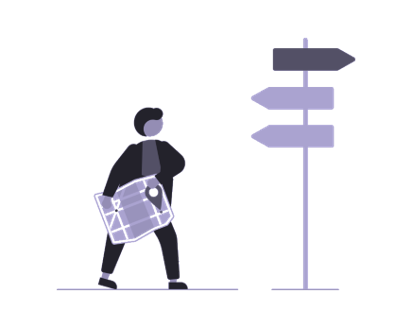
The logic follows that if you tell the same lie 7 times, people stop denying it and begin to believe it. Fire hosing does two things: it creates so much content that people spend a lot of time decoding and deconstructing it and miss the real story or reason. The second is that it attempts to pass an idea off as the truth.
The Firehose of Falsehood
• High Volume of propaganda: Lies repeated by different sources
• Rapid, Continuous, Repetitive
• No Commitment to objective reality: Completely false or kernel of truth
• No Commitment to Consistency
What is a Narrative?
Narrative can be defined as:
- “a system of stories that share themes, forms, and archetypes”, or
- “a collection of stories told from a particular point of view”
What Are Signs of Propaganda Narratives?
- There is something wrong/unjust in the world.
- We need to act to fight this injustice/oppression.
- We are the only ones who are able to fight the oppressors.
- If you’re not with us, you’re against us (thus, supporting the oppressors).
- We are the vanguards of a revolution so violence is allowed against anyone who opposes us.
From radio and film to newspapers and publishing, the Nazi regime controlled every aspect of German culture from 1933-1945. Through Josef Goebbels’ Ministry of Public Enlightenment and Propaganda, the German state tightly controlled political messaging, promoting deification of the leader—the Führerprinzip—and the demonization of the ubiquitous and duplicitious “racial enemy.” A new exhibit at the United States Holocaust Memorial Museum in Washington, D.C., examines “how the Nazi Party used modern techniques as well as new technologies and carefully crafted messages to sway millions with its vision for a new Germany.” Reason.tv’s Michael C. Moynihan visited with museum historian and curator Steve Luckert to discuss the role and effectiveness of propaganda in the rise of fascism and what lessons can be drawn from the Nazi experiment in mass manipulation. (Source: http://reason.tv)

What is Polarisation?
Source: Dare to Be Grey
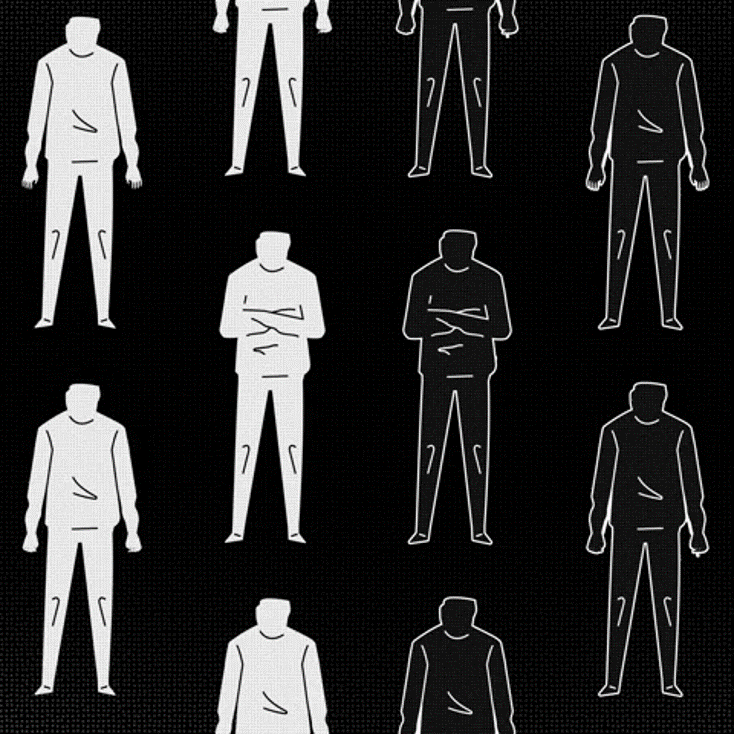
Polarisation is a process of increasing ‘us-versus-them’ divisions in society. It can be found in almost every place and time: it’s not rare or alien. There can be a number of causes which don’t have to necessarily be negative or have an evil occurrence. Loads of civil movements found parts of their success through polarising tactics even.
But that is not to say that polarisation is without its dangers. It will always come with a certain risk of escalation that often can involve violence.
Core to the process of polarisation is the development of a specific language of absolutes, where both sides of a certain argument consider themselves to be the ‘good’ side, while they consider their opponent to be the ‘evil’ side. Narratives are not necessarily about factual information, but about emotion and identity, and that can become really problematic.
In this case, narratives are related group identity: An ‘in-group’ is one that you belong, and an ‘out-group’ that you are against. Historically, the identity of a group is usually formed against the background of a certain ‘other’. For examples, we can look at the Ancient Greeks and the ‘barbarians’, Catholics and Protestants, and much more.
This in-out-group formation is very much a human instinct, and its in this process that we can usually see the birth of polarisation.
As polarisation in society increases, there’s a decline in willingness of groups to live together and share the same society. Polarisation stops people from seeing each other as human beings and can amplify the possibility of making people vulnerable to radicalisation and, in turn, violent extremism and terrorism.
The three key aspects of polarisation are:
The Role of the Internet

Although offline polarisation has been around for as long as recorded history, the rise in Internet access and social media usage over the last ten to fifteen years has culminated in the new phenomenon of online polarisation. Because of the radically changed online nature of society these days, online polarisation is much more prevalent and feeds heavily into what happens offline. We should see online and offline polarisation as intertwined, impacting each other in both directions.
There are four factors we can identify that make online polarisation a revolutionary, new dimension to this age-old phenomenon:
But we have dealt with negative consequences of life-changing technologies before! Like the mass introduction of the car, which required decades of traffic regulations and safety checks before it was truly safe. The Internet, and social media, are at an early point in its history so they will still require years of extra regulation efforts, both politically and socially. Once we achieve this, we hope that the Internet will be a safe place for all to use.