Step 8: Use and Adaptation of ToC
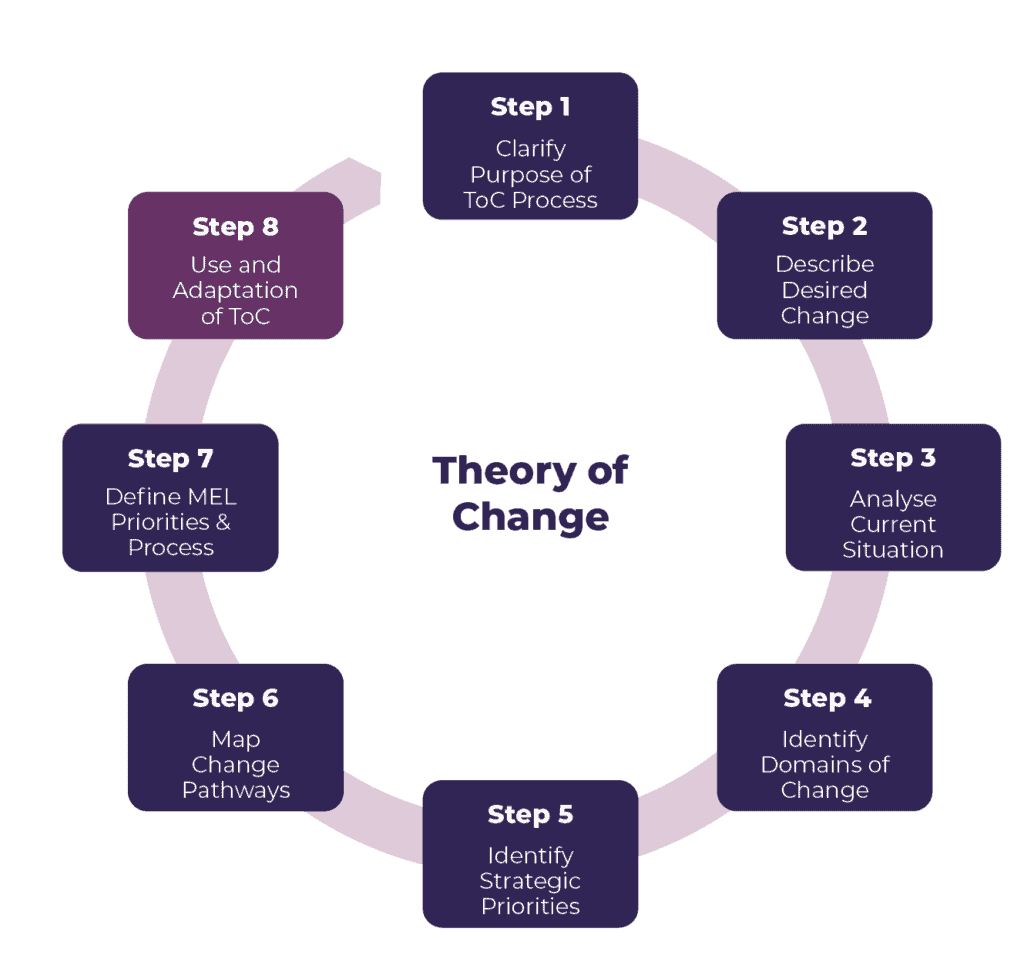
To be most effective, ToC use needs to be firmly embedded in the process cycle of the project and the organisation. When a ToC is not used to reflect on implementation and regularly revisited and updated, the investment in developing it is largely lost.
How, then, do you use a ToC during project implementation to plan, navigate strategically, monitor, and learn?
A ToC process is not a one-off exercise in the design phase of a programme, but implies an ongoing action-learning cycle. In order to effectively learn from ToC use, we need to anchor reflection processes in the project cycle. That means that time and incentives for reflection, learning and documentation must be consciously organised.
Regular reflection sessions with staff, partners and stakeholders to take stock of experiences and results need to become a habit. ToC-led reflection sessions are effective when they become specific responsibilities that support regular management processes such as annual planning and reporting cycles. Revisiting ToC pathways, assumptions and strategies can then become integrated into the planning process. For reporting, using the ToC as the reference point helps to focus PMEL reports on key change areas, as well as activities and outputs.