Step 1: Clarify Purpose of the ToC process
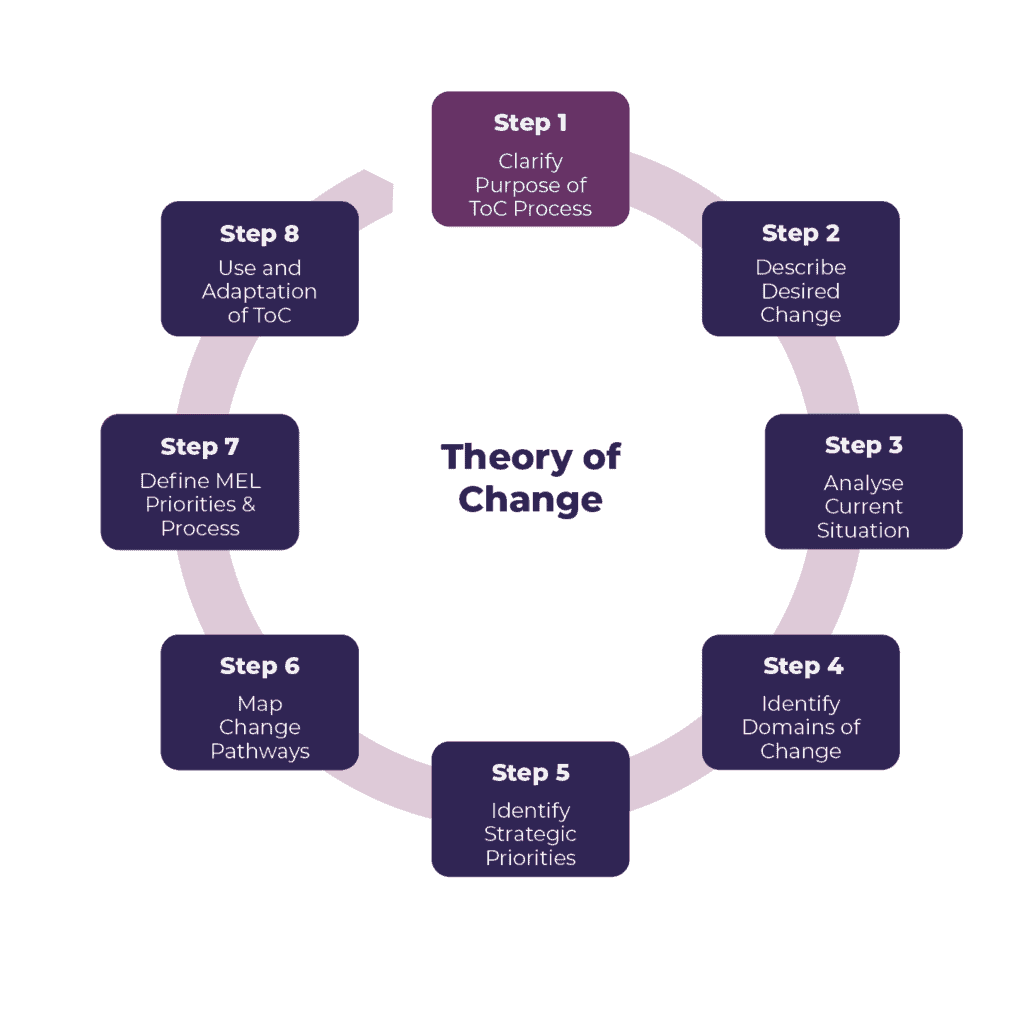
A clear purpose of going through a ToC process gives you a sense of direction and helps to ensure that the participants start off on the same foot. The purpose informs decisions about who should participate in the process, how to shape the process, which levels it needs to encompass, what type of outputs or products you want to end up with and which questions need specific attention in each step.
There are two types of purposes for going through a ToC process that need consideration:
1. Why are we doing this? Thinking about why you are doing a ToC process and what will be different as the result, obliges you to be open to questioning your current practice. Are we doing ‘the right thing’? Is there a better mix of strategies than our usual repertoire, do we need to rethink resource allocation? Or, what is problematic that the ToC process might solve? Are there conflicting perspectives in the team or partnership? Are we lacking evidence of what has and has not worked? Do changes in the context require a rethinking of focus and feasibility?
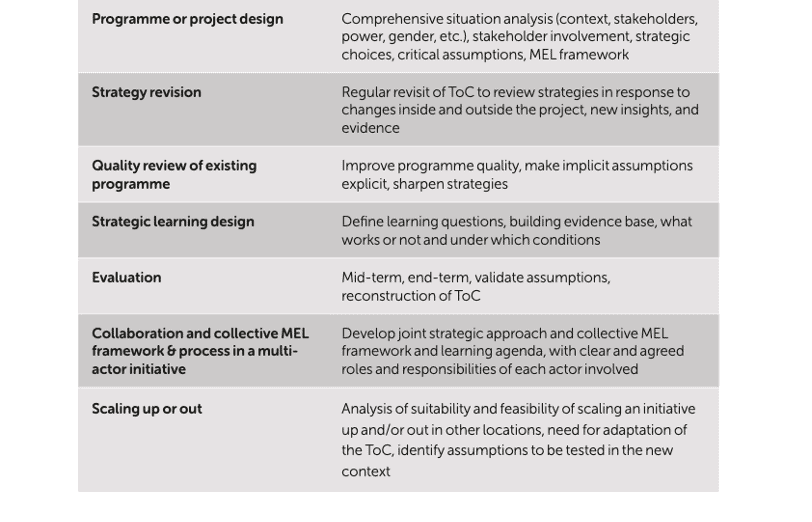
2. What is the intended product of this ToC process? ToC thinking can be used for different purposes, summarised in Table 3. A ToC process to design a project is different from a strategy revision, or using ToC to develop a learning or research agenda. These questions will need to be answered partly in preparing the ToC process with the larger group of stakeholders. However, both core questions need full attention at the start of the actual ToC development process with the wider group of participants. Clarity and understanding of the purpose of the process is necessary for aligning expectations and is conditional for full and successful participation.