
The Pleasure Approach

Historically, sexuality education has focused on reducing sexual risks and centred around “appropriate” behaviour. Discourse on pleasure, desire and the lived sexual experience have been largely missing. The pleasure approach, the triangular approach or “sex -positive” approach are terms that are used interchangeably to define an approach to sexual education and information that is different from the risk-based approach, which focusses on the risks and avoiding the negative consequences of sex.
The pleasure approach recognises that young people are living sexual beings that want to experience love, sex and relationships that are both enjoyable and safe. By doing so, sexuality education information using the pleasure approach covers the full scope of sexual experience and pleasure, and not exclusively topics related to the reduction of sexual health risks.
The pleasure approach forms the basis for the Love Matters programmes, guiding the content creation and moderation on the platforms. It is a concept that has been thoroughly described and embraced by various organisations, such as the Global Advisory Board (GAB) for Sexual Health and Wellbeing and The Pleasure Project. Throughout this module we will make use of/and refer to key resources from GAB and The Pleasure Project among others. To understand the pleasure approach, it is important to define the key concepts first.
Triangle approach to addressing sexuality
There are three interlinked elements to the triangle approach: sexual health, sexual rights, sexual pleasure. This refers to the “triangle approach”, a conceptual framework designed by the Global Advisory Board for Sexual Health and Wellbeing (GAB) to strengthen SRHR policy and programming. Addressing each of the elements is crucial to be able to ensure a positive approach to sexuality in SRHR interventions. For a shared understanding of these terms, it is important to define them.
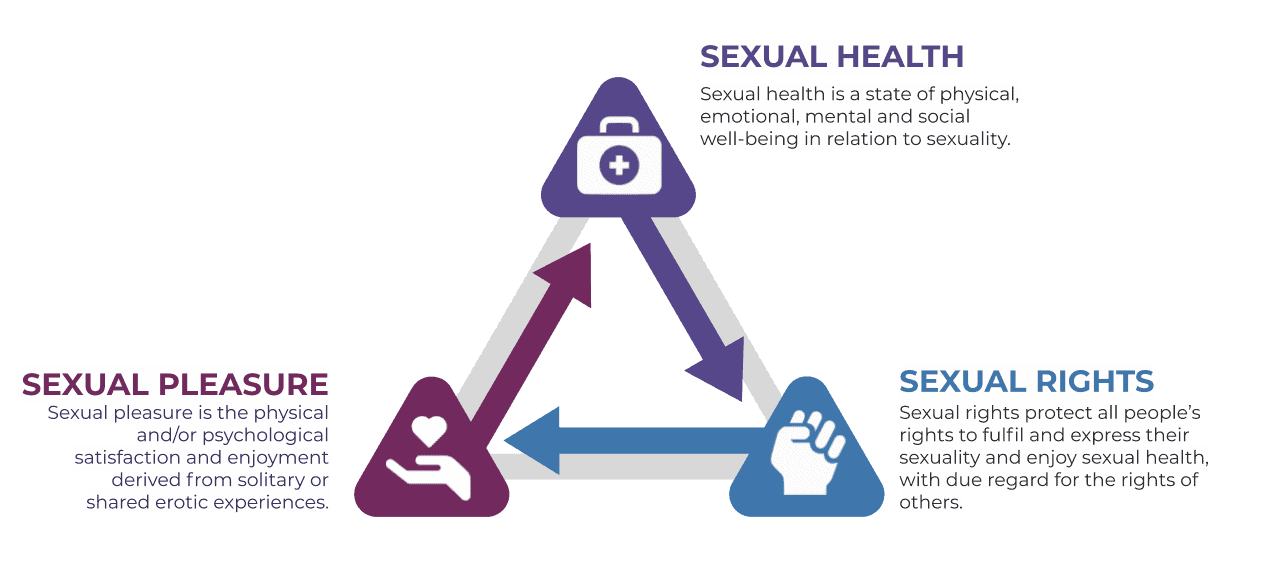
Sexual health
Sexual health requires a positive and respectful approach to sexuality and sexual relationships, as well as the possibility of having pleasurable and safe sexual experiences, free of coercion, discrimination and violence. For sexual health to be attained and maintained, the sexual rights of all persons must be respected, protected and fulfilled.
Sexual rights
The responsible exercise of human rights requires that all persons respect the rights of others. The application of existing human rights to sexuality and sexual health constitutes sexual rights. Some common misconceptions are that sexual rights only refer to the rights of lesbian, gay, bisexual, transgender, intersex and queer/questioning (LGBTIQ) people and sex workers, or that they are just about the right to have sex. Sexual rights, however, apply to all people. That includes:
- The rights to equality and non-discrimination
- The rights to information, as well as education
- The rights to freedom of opinion and expression
- The right to be free from torture or cruel, inhumane or degrading treatment or punishment
Sexual pleasure
Self-determination, consent, safety, privacy, confidence and the ability to communicate and negotiate sexual relations are key enabling factors for pleasure to contribute to sexual health and wellbeing”. Some key factors to sexual pleasure are:
- Physical and psychological satisfaction/enjoyment: everyone – regardless of age, sexual orientation, gender identity and expression, race, ethnicity, disability, practices, socio-economic background, HIV status or any other characteristic – can enjoy their sexuality in the way they choose.
- Self-determination: people’s capacity to make free choices regarding their sexuality.
- Consent: actively agreeing to have sex or engage in sexual activity.
- Safety: encompasses physical and emotional safety in sexual relationships. It also refers to safer sex, including condom use, contraception, safe abortion, HIV/STI testing, prevention, treatment and care, pre-exposure prophylaxis (PrEP) and post-exposure prophylaxis (PEP).
- Privacy: enjoying sexual activity (alone or with others) in private.
- Confidence: feeling comfortable in one’s own sexuality and feeling good about the decisions taken in one’s sex life.
- Communication/negotiation: communicating openly about sex and sexuality and discussing expectations with partners: what they want and don’t want to do.
All three elements, comprising of sexual health, sexual rights and sexual pleasure, as well as the positive intersections between them, need to be included to meaningfully address sexuality in SRHR interventions. Any of the three can be leading as long as all are addressed. Although pleasure itself is an important topic to engage youth, it should be clear that it is just one of the topics that needs to be addressed in comprehensive sexuality education and that the pleasure approach itself can be used as the starting point for further discussions on making informed choices and independent sexual decisions to view sexuality as something positive rather than negative.
Case Studies
In the section below, you can find some examples from various Love Matters partner platforms:
LOVE MATTERS INDIA: VISUALISING PLEASURE ONLINE
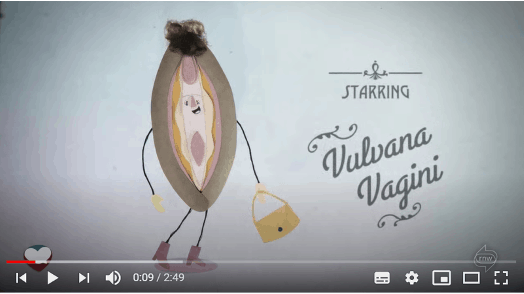
In India, Love Matters has created a series of pleasure positive films to engage users with their content. The films cover how to give and receive pleasure safely, respectfully and enjoyably. In true Love Matters style the films are informal, educational and humorous.
- Ways to make love to her – Love Matters India
- Ways to pleasure him – Love Matters India
LOVE MATTERS KENYA: PLEASURE IN PRACTICE
This article on Lover Matters Africa, contains tips for giving and receiving pleasurable oral sex, highlighting some techniques while also including a tip to use a barrier method of protection and to always ensure all participants have given their enthusiastic consent.
- Oral sex: do’s and don’ts – Love Matters Kenya

This is sex education with a pleasure focus, that engages young people’s interests while ensuring that information on reducing sexual risks is also included.
As can be seen using this example, addressing sexual pleasure does not mean that we should disregard the health risks that can be linked to sex, as these remain an essential part of sexual health.
Love Matters shows that by building awareness, trust and community around sexual health through openly addressing pleasure by acknowledging that young people are sexual beings, it is also possible to provide fact-based SRH information to millions of young people around the world.
LOVE MATTERS ARABIC: THE POWER OF PLEASURE

Love Matters Arabic designed and implemented a campaign around sexual pleasure in 2019 which generated the highest reach and engagement since the platform launched in 2014.
Love Matters Arabic, the only Arabic language platform to take a ‘pleasure positive’ approach to sexuality, has been addressing many taboos and stigmas around SRHR of young people that prevail in Egypt and other MENA countries.
The content created for the week-long campaign around sexual pleasure reached more than 7.7 million people and generated more than 1.1 million interactions (likes, comments, shares).
While reactions were overwhelmingly positive, there was also criticism from some users. When designing the campaign, the team had in-depth discussions about how they would deal with negative reactions and the ways in which moderators might be able to encourage positive conversations.
Once the campaign started, audience feedback was carefully monitored, and sometimes content planning was modified to reduce risk. Anal sex, for instance, was highly controversial so the visual content around this topic was adjusted to be less challenging for conservative followers.
In the end, there was much less negative feedback than the team had been expecting. The number of new ‘Likes’ for the Love Matters Arabic Facebook page was three times greater than ‘Unlikes’ and the page attracted 41.5k new followers while only 16.8k people Un-followed. The website attracted more than half a million extra page views during the campaign period. The most popular post on the Facebook page was a ‘painted’ animated video created collaboratively by the whole team.
Tools
There are various resources that provide information and tools that can help you to integrate the pleasure positive approach in your work:
- The Pleasure Project – Global mapping of pleasure, containing a directory of organisations, programmes, media and people who eroticise safer sex
- Fulfil! – Developed by IPPF and the World Association for Sexual Health, it is a technical tool which links sexual health, sexual rights and sexual pleasure to inform SRHR programmes
- Sexual Pleasure training toolkit: The forgotten link in sexual and reproductive health and rights (GAB, 2018) – Enables trainers and facilitators to provide quality SRH services, linking sexual health, sexual rights and sexual pleasure.
Both The Global Advisory Board (GAB) for Sexual Health and Wellbeing and the Pleasure Project, are key organisations on this topic and provide various training resources, toolkits as well as publications on their websites on the Pleasure Approach.