
Advocacy Tactics: Deep Dive Copy
Round Table

A roundtable session is a form of facilitated discussion that brings together diverse stakeholders to exchange ideas, share perspectives, and collectively address a specific issue or policy area. This format typically involves participants sitting at a round table, symbolizing equality and fostering an open dialogue.
Example: Consider organizing a roundtable session focused on environmental policy. Invite representatives from environmental advocacy groups, governmental agencies, industry experts, and community members. This diverse assembly provides a platform for each stakeholder to contribute valuable insights, discuss concerns, and collaboratively explore solutions for more effective environmental policies.
Tips:
- Diverse Representation: Ensure that the roundtable includes participants from all relevant perspectives related to the issue at hand. This diversity fosters a comprehensive understanding of the challenges and potential solutions.
- Facilitation: Designate a skilled facilitator to guide the discussion, maintain focus, and encourage active participation. The facilitator plays a crucial role in ensuring a productive and inclusive conversation.
- Preparation: Provide participants with background materials and information before the session to facilitate informed discussions. This allows stakeholders to come prepared and contribute meaningfully.
- Structured Agenda: Develop a well-structured agenda with defined discussion points. This helps maintain a focused and organized conversation, ensuring that key issues are addressed during the session.
- Inclusivity: Create an inclusive environment where every participant feels comfortable expressing their views. Encourage active listening and discourage dominating the discussion, allowing each stakeholder to contribute equally.
- Follow-Up: After the roundtable session, consider summarizing key insights and action items. Share this summary with participants and explore opportunities for ongoing collaboration or follow-up discussions.
Digital Roundtable

There are creative ways to have discussions in the digital world, DISCORD is an alternative social media platform often used by journalists to create safer digital communities with this app you can:
- Server Setup: create a dedicated server for a roundtable
- Manage roles & permissions within the community
- Add Bots for assist in facilitation (scheduling, moderating, translating)
- Add voice and video channels
- Live Streaming
Another great example of an alternative social media is Mastodon, we recommend you check your options!
Petitions
A petition is a powerful tool for mobilizing public support or opposition on a specific issue. It involves the collection of signatures from individuals who endorse a particular cause, expressing a shared stance. Petitions can be both digital and physical, allowing for a wide reach and diverse participation.
Example: Imagine a community rallying against the construction of a waste incinerator that poses environmental risks. A petition is initiated, aiming to collect signatures from residents who oppose the project. The petition clearly outlines the concerns related to air quality, health hazards, and potential harm to the local ecosystem.
Tips
- Clearly Define the Issue: Provide a concise and clear description of the problem or concern. Avoid jargon and ensure that the language is accessible to a broad audience.
- Craft a Compelling Call to Action: Clearly state what action you are urging authorities or decision-makers to take. Whether it’s halting a project, reconsidering a policy, or initiating an investigation, the call to action should be specific.
- Simplify Participation: Make it easy for people to participate. Whether it’s a physical petition in a community centre or an online form, ensure that the process is straightforward. Include contact information for those who want to learn more or get involved further.
- Leverage Multiple Platforms: Utilize both online and offline channels to maximize reach. Digital petitions can be shared through social media, email, and dedicated petition platforms, while physical petitions can be available at community gatherings and local businesses.
- Engage Stakeholders: Reach out to community leaders, influencers, and organizations to endorse and share the petition. Their support can significantly amplify the impact and reach of the campaign.
- Provide Supporting Information: Include supporting materials or links to additional information for those who want to delve deeper into the issue. This can help build credibility and educate signatories about the cause.
- Regular Updates and Acknowledgments: Keep participants informed about the progress of the petition. Regular updates, acknowledgements, and milestones achieved contribute to transparency and maintain momentum.
- Encourage Grassroots Advocacy: Empower participants to become advocates themselves. Encourage them to share the petition within their networks, fostering a grassroots movement.
A well-executed petition strategy not only collects signatures but also serves as a platform to raise awareness, engage the community, and demonstrate the strength of public opinion on a particular issue.
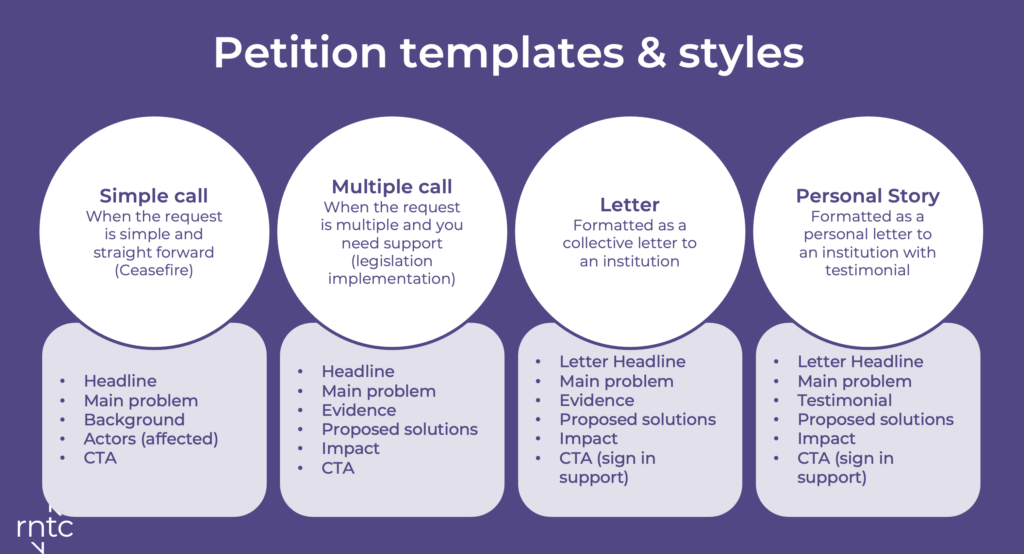
Extra Source: Link for Change.org Petition templates and samples
Protests and Sit-ins

Protests: Protests are public demonstrations or gatherings where individuals assemble to express their disapproval, dissent, or opposition to a particular cause, policy, or societal issue. They serve as a powerful form of collective expression, often involving chants, signs, and organized marches to communicate a shared message.
Planning and Preparation for Protests
Category | Actions |
|---|---|
Define Objectives | Outline goals and objectives. Identify specific desired changes or actions. |
Coordinate Logistics | Plan march route and assembly points. Secure necessary permits for public gatherings. |
Communication Strategy | Develop a plan with press releases and social media. Create signs and banners with key messages. |
Legal Know-How | Educate participants on legal rights/responsibilities. Coordinate with legal professionals for support. |
Safety Measures | Establish safety protocols for participants. Set up medical stations and access to emergency services. |
Risks and Recommendations for Protests
Risk Category | Recommendation | Preparation |
|---|---|---|
Legal Risks | Work with legal experts to understand local laws. | Develop a legal team for guidance. |
Social Risks | Conduct campaigns to explain the cause. | Have spokespeople ready for dialogue. |
Political Risks | Engage with political stakeholders to reduce conflicts. | Prepare for political repercussions and plan contingencies. |
Sit-ins involve a group of people occupying a space, often a public or government building, to peacefully protest or demonstrate opposition. Participants typically sit or remain in a specific location for an extended period, aiming to disrupt regular activities and draw attention to their cause.
Planning and Preparation for Sit-ins
Planning Aspect | Details and Actions |
|---|---|
Choose Location Wisely | – Select a location with strategic and symbolic significance to the cause. – Assess accessibility and the impact on regular activities. |
Communication Channels | – Establish channels for participant communication during the event. – Coordinate with media for event coverage. |
Legal Briefing | – Provide legal information and potential consequences to participants. – Ensure legal representation is available during the event. |
Resource Management | – Plan for necessary resources: food, water, sanitation. – Consider the duration and participant impact. |
Security Measures | – Develop a plan for participant safety. – Collaborate with law enforcement to maintain order. |
Risks and Recommendations for Sit-ins
Risk Category | Recommendations | Preparations |
|---|---|---|
Legal Risks | – Seek legal advice and inform participants of legal implications. | – Establish legal support and understand local laws. |
Social Risks | – Communicate the purpose of the sit-in to the public. | – Anticipate reactions; have spokespeople ready. |
Political Risks | – Engage with political figures to avoid conflicts. | – Understand political climate and potential repercussions. |
In the next section we will consider how to link these strategies to social media but for now, check out this video for inspiration