Narrative Change (Behavior & Social Norms)
Introduction to Narratives
What are Narratives?

Source: Link to Narrative Spices (JustLabs)
What are narratives?
“At its most basic narrative describes the way a story is told. It is a way of coherently tying events, characters, and ideas together. Applied to politics, activism or advocacy, narrative as a tactic means paying attention to subjectivity: what do people believe about how the world works? How do people tie together characters, events, and ideas in our world. What are the deep currents that shape how out work is received? What is the bigger picture that each story told contributes to (deep narratives)? Convincing people requires taking into account the deeply entrenched beliefs. How do we encourage and invite one another to change? It is also about how we – as individuals, organisations, and movements – evolve in our relationship to one another and to the communities of people we engage with.” – Lucas Paulson, JustLabs
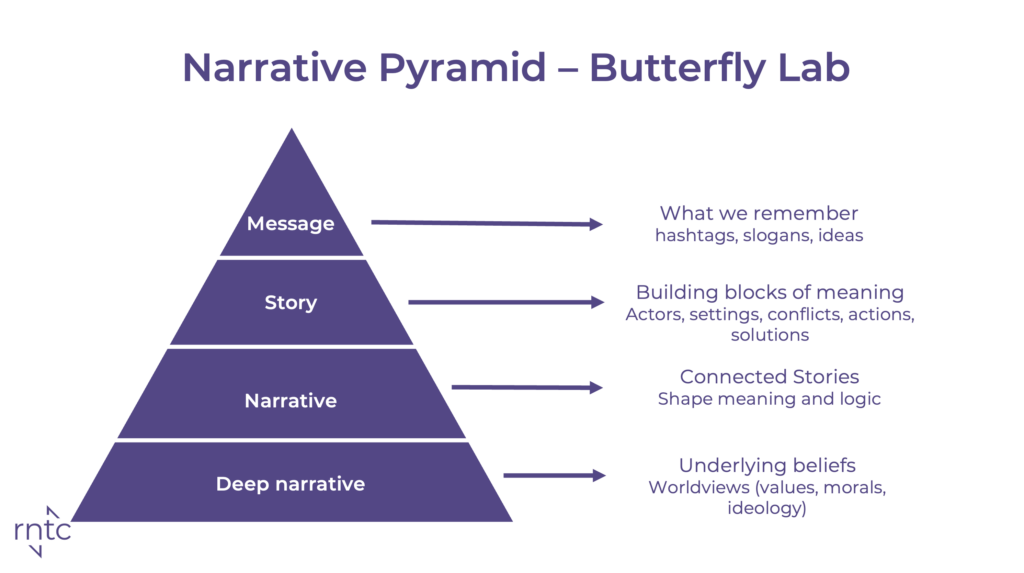
Narrative Pyramid – Butterfly Lab
Key Definitions
- Message (What We Remember): Messages are like sticky notes, containing hashtags, slogans, and ideas. They remind us of what to think and guide our actions. Often used in campaigns, the best ones become narratives.
- Story (Building Blocks of Meaning): Stories are made up of characters, settings, conflicts, and actions that unfold over time. Our brains naturally make sense of the world through stories. They are the fundamental units of change.
- Narrative (Connected Stories): Narratives are a collection of related stories and messages about a specific subject. They suggest causes, highlight problems, and propose solutions. Narratives shape how we feel, think, and act—driving societal movement.
- Deep Narrative (Underlying Beliefs): Deep narratives are the invisible frameworks and values holding narratives together. These deep narratives form worldviews, shaping how people understand their world.