
The 11 Steps to Building Communities for Social Change

STEP 1: ANALYSE YOUR DIGITAL COUNTRY CONTEXT
In this first step, you will collect relevant information to understand what is going on in the digital context of the country you want to work in. This can be done by doing desk research on existing information, by doing an online content analysis on relevant topics, through surveys, focus groups discussions and other methods. The module also provides insights into how to best involve young people in your research and what aspects are important to keep in mind when you are doing a context analysis for digital youth SRHR interventions.

STEP 2: DEFINE YOUR TOC
A Theory of Change (ToC) is a methodology that comprehensively describes why and how the desired (social) change you want to contribute to is expected to happen. In this module, you will explore the key elements of a ToC and learn how to create one. Starting by identifying your mission and vision, you will work towards a ToC product which consists of a ToC narrative and a visualisation.

DECISION TREE
The decision tree was developed to have a check-in moment before you get into the practicalities of building digital communities for social change. It gives you a chance to ask: “What is the impact I want to achieve?” and, “Will a larger community increase my impact?” but also, “Is my target group accessible online?” and “Do I have the resources to invest?”. These are all important questions that you need to ask yourself before deciding to use digital tools and channels to create social impact at scale.

STEP 3: DEFINE YOUR TARGET AUDIENCE
If you decide that the usage of digital tools and channels will help you achieve the impact you want to make, you can start defining your target audience. In this step, you will have to define to whom your activities will be targeted at to be able to achieve the intended results. You will learn how to create a target audience map, how to create personas and how to develop a user journey to understand your target audience and their needs.

STEP 4: BUILD YOUR TEAM AND PARTNERSHIPS
In the fourth step, you will identify what roles are needed to make up a good working team and what responsibilities are attached to the specific roles. The module will also cover recruitment strategies and underline how your team should reflect your intended users and be inclusive and diverse. You will also learn about the digital skillset that your team members will need to possess, how to prepare your team for their roles and how to develop an organisational support system. This step will also cover the importance of assessing potential partner organisations to collaborate with. You will understand what types of partnerships exist and how you can establish and maintain successful ones.

STEP 5: DECIDE ON (DIGITAL) CHANNELS
There are many different digital platforms and channels that you can work with to build your digital community. In this step you will learn the differences between medium and channel and recognise the specificities of various social media and mobile channels. Furthermore, you will identify the digital channels that you can select to reach your target audience, taking your goals and capacity into account. Finally, you will identify and analyse the channels that your competitors are using in order to improve your own channel strategy.

STEP 6: DEVELOP YOUR STRATEGIES
There are many different strategies that you can consider developing for different purposes. You can also make use of already existing strategies; however, it is important that you contextualise your strategies to make them fit for purpose.

STEP 7: THE PLEASURE APPROACH
This step will introduce to you to The Pleasure Approach, which is used by Love Matters to reach young people with open, honest and pleasure-positive information on love, sex and relationships in places where such information is often censured or taboo. What sets this approach apart from others is that instead of focusing solely on sexual disfunction and disease avoidance, it positions pleasure at its core. This module will cover the triangular approach to SRHR – incorporating pleasure with sexual health and rights – and illustrate how it has been used by Love Matters in different settings around the world.

STEP 7.1: CREATE SRHR CONTENT
This step focuses on creating digital content for the online community and guides SRHR experts through a range of communication channels and formats that can help in the creation of engaging and relevant sexuality content. The module introduces the persuasive storytelling methodology and a range of formats that can increase user engagement and SRHR knowledge retention. It will also illuminate the importance of assessing your topics against international guidelines but also against your local context.

STEP 7.2: MODERATE & SUPPORT ENGAGEMENT
This step will look at the Love Matters approach to moderation and supporting engagement to build and maintain inclusive online SRHR communities. It will showcase how following the pleasure approach means ensuring that moderation is sex-positive, aspirational and open-minded. It will also cover how to make use of Search Engine Optimisation/Marketing (SEO/SEM) strategies. Finally, due to the sensitive and emotional nature of many SRHR topics, the module will also provide guidance on coping mechanisms and self-care tools that can be used by moderators.

STEP 8: REFER YOUNG PEOPLE TO SERVICES
Through your users’ engagement on your digital platforms, needs or issues of young people might surface, that cannot be addressed by your organisation. In these cases, where you need specialised knowledge or expertise, you can refer young people to external services or resources. This step will guide you through the service referral model of Love Matters: from assessing the need for referral to identifying relevant services to monitoring and understanding whether the services are accessed successfully by your users.
STEP 9: COLLECT INSIGHTS ON YOUTH NEEDS, BEHAVIOUR AND ASPIRATIONS
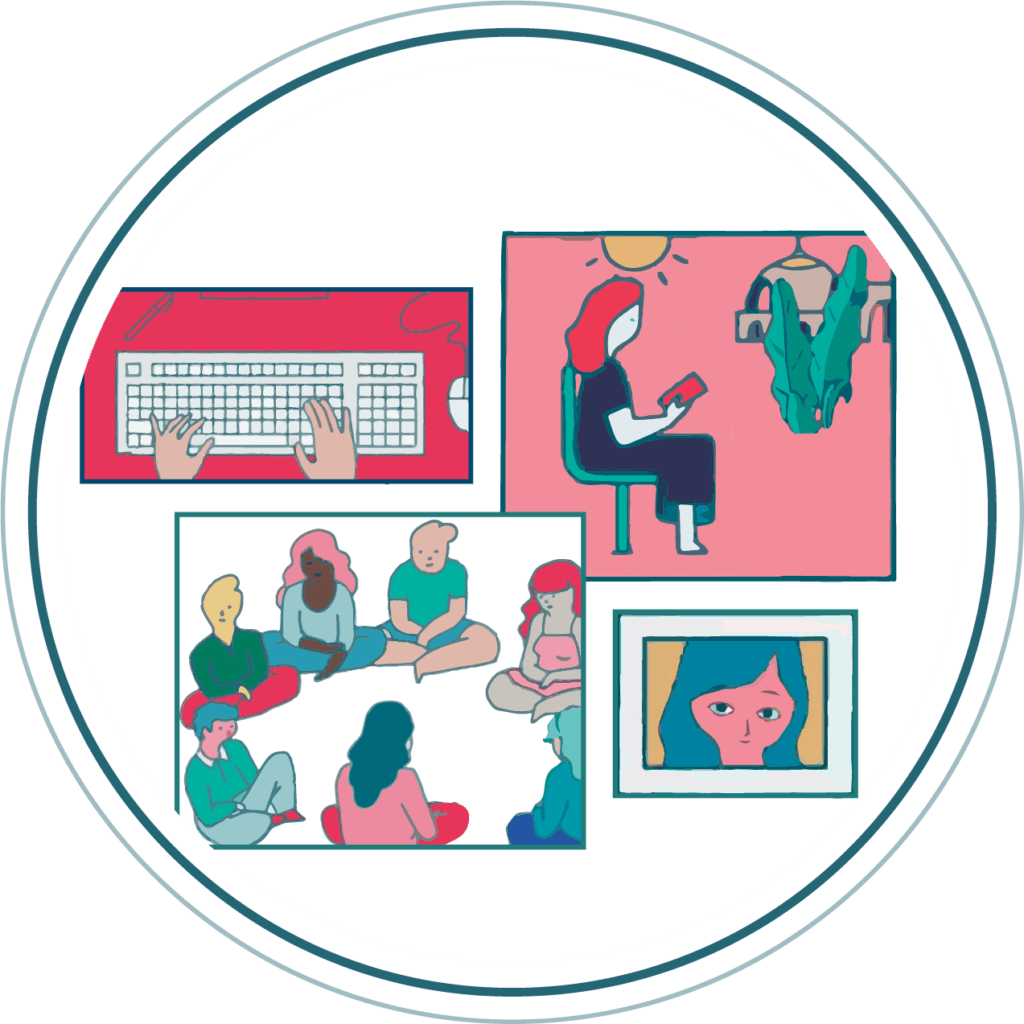
To make sure that your digital channels reflect the needs of the people you want to serve, to carry out effective campaigns, and to engage in lobby and advocacy activities on these needs, data needs to be collected. In this step, you will learn how to collect valuable information through different tactics, namely: social listening, social media analytics, surveys and focus group discussions. You will be able to select between different methods of collecting data and you will know how to visualise it. It is important to keep in mind that not all data can be accessed and spread. Therefore, you will also be introduced to the General Data Protection Regulation (GDPR) law, as well as the RNW Media Responsible Data Framework (RDF) which focuses more on the ethical aspects of data collection.

STEP 10: ADVOCATE AND AMPLIFY YOUTH NEEDS
After collecting data on your target audience’s behaviour and needs, you can work on ways to advocate for those needs and to amplify young people’s voices. In this module you will learn about advocacy, the tools that you can use to advocate and the steps to building an advocacy strategy. You will also get acquainted with a wide variety of amplification tactics: from using traditional media to organic and paid online amplification to offline actions and events.

STEP 11: EVALUATE
As a final step in the roadmap, you need to evaluate. In this step, you will familiarise yourself with the Planning, Monitoring, Evaluation and Learning (PMEL) cycle to find out whether you have achieved your objectives. The PMEL cycle you will get acquainted with addresses a mixed-method approach of combining quantitative and qualitative data and analysis methods from digital and non-digital sources.